





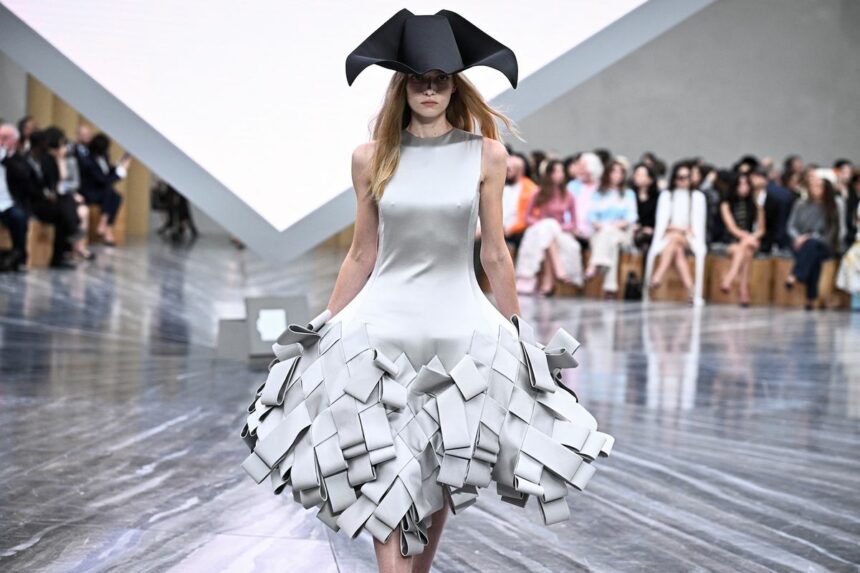
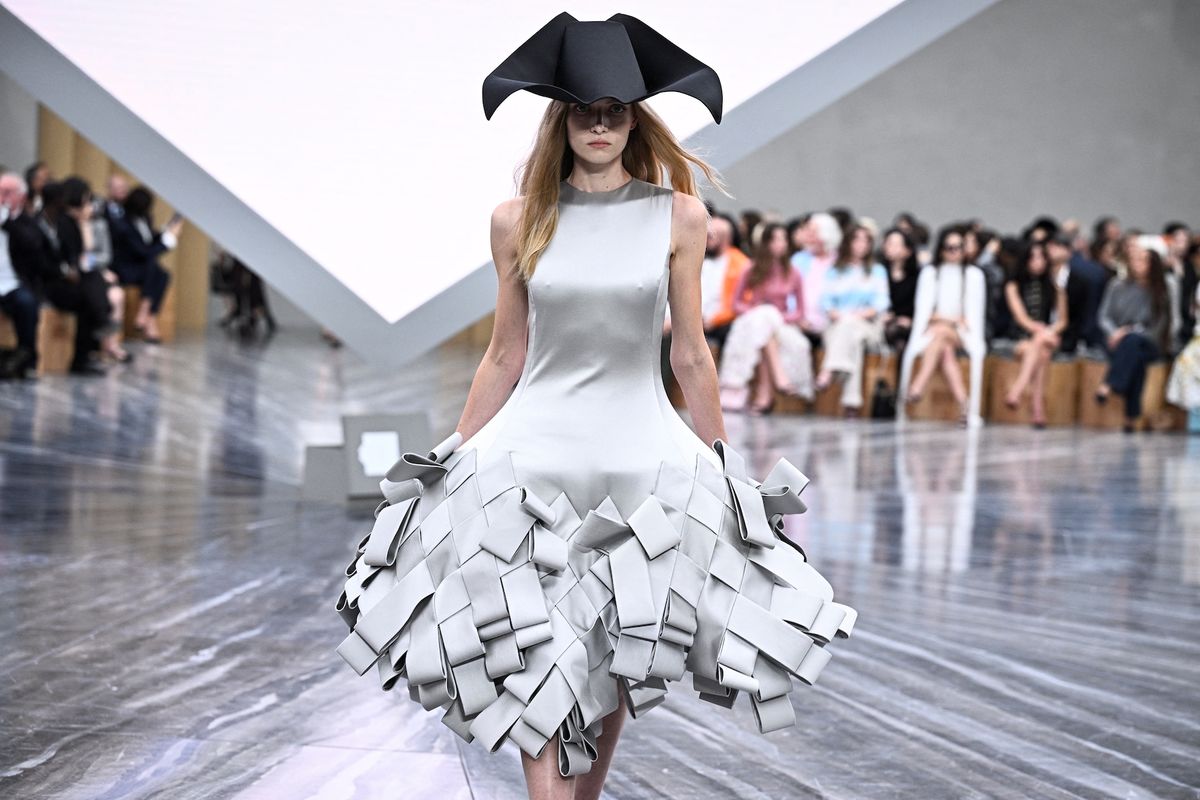
Timeless Classics with a Modern Edge
Classic wardrobe staples continue to resonate with designers and consumers alike. However, in today’s crowded fashion landscape, simply offering basics is no longer enough. Brands will need to elevate craftsmanship and present a strong design identity to stand out.
For the Autumn/Winter 2026–2027 season, inspiration from the minimalist style of the 1990s is expected to play a major role. Clean silhouettes combined with heritage color palettes—such as charcoal grey, deep red, and classic navy—will dominate collections.
When it comes to prints, designers are likely to lean on dependable commercial favorites. Expect to see small-scale florals, elegant foulard patterns, and zebra motifs returning to the runway. Polka dots and subtle skin-like textures may also act as versatile “new neutrals,” offering understated visual interest for fans of minimalist fashion.
Elevated Romance
Romantic design elements remain influential, but they are evolving toward a more luxurious and decorative interpretation. As fashion continues to shift toward maximalist expression, A/W 26/27 will embrace ornate detailing inspired by historical design and traditional craftsmanship.
Textiles and prints will draw inspiration from interior design, featuring tapestry-like motifs and jacquard-style patterns that create richness and depth. Decorative florals and scarf-inspired prints will appear prominently, often arranged in borders or intricate compositions that enhance everyday silhouettes.
Balancing this opulence, designers will introduce elements of intentional imperfection. Raw hems, slightly distressed finishes, and irregular trims will create a worn, vintage-inspired feel, giving garments a sense of character and authenticity rather than polished perfection.
The Rise of Sportsmart Style
With 2026 hosting both the Olympic Games and the FIFA World Cup, sporty influences are expected to leave a strong mark on fashion collections. Yet the interpretation will extend beyond obvious sportswear references like jerseys or athletic uniforms.
Instead, the trend will merge athletic inspiration with refined fashion aesthetics. Designers may pair romantic shapes with streetwear-inspired details or integrate traditional craftsmanship into performance-oriented fabrics. Cultural motifs and handcrafted elements could also appear in sports-influenced pieces, blending heritage artistry with modern athletic design.
Bold Minimalism
Minimalism continues to evolve, particularly through changes in silhouette and structure. Rather than the rigid, boxy shapes seen in previous seasons, sleeves and shoulders are likely to adopt softer, rounded forms that feel more organic and fluid.
Draping techniques and asymmetric fabric manipulation will give dresses and outerwear a fresh perspective. Meanwhile, more experimental designers may explore flattened or two-dimensional shapes inspired by paper-doll styling, adding a playful, graphic dimension to otherwise simple garments.
How WGSN Catwalk Analysis Works
Each fashion week season, WGSN leverages advanced technology to monitor emerging runway trends. Using its AI-powered image recognition platform, WGSN Fashion Vision, the company analyzes thousands of catwalk images to detect shifts in colors, silhouettes, and key design elements.
The WGSN Catwalks platform provides real-time insight from major fashion capitals—including New York, London, Milan, and Paris—while also tracking year-over-year changes across important fashion categories.
Through proprietary analytics and runway data, WGSN identifies the most significant seasonal developments, helping designers and brands plan future collections with confidence.
From live runway coverage to detailed post-show analysis, the platform brings together all the essential insights from global fashion weeks in one comprehensive hub.