





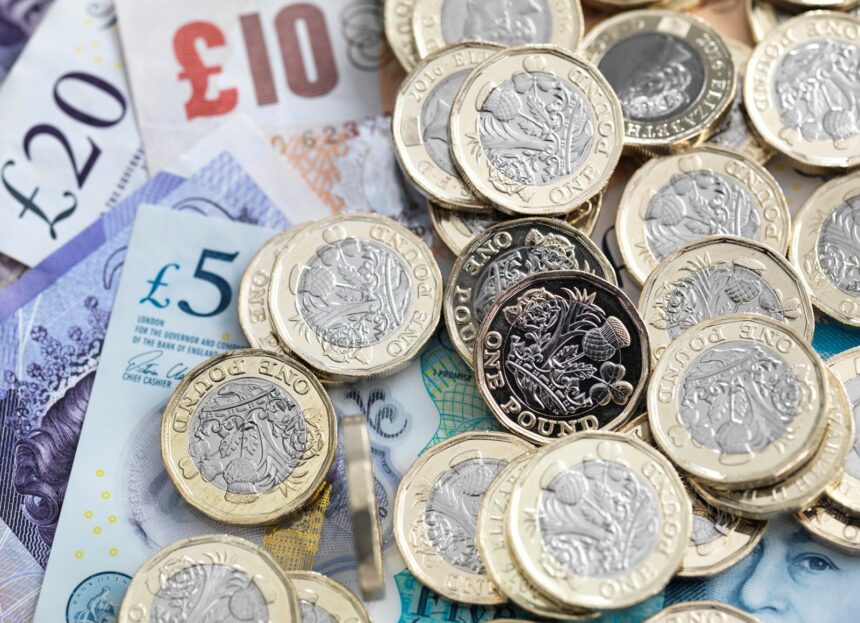
Money, it has been said, is “a social convention.” Everyone agrees some pieces of paper or discs of metal issued by a government have a specific value, and everyone also agrees to that value. Then, these scraps of paper and metal are exchanged by everyone for equivalent goods, services, or other items. But what sorts of things other than bills and coins have been used as money, and what will be used after these things?
One form of money has been part of a snail—more specifically, the shells of the marine snails of the subclass Prosobranchia within the class Gastropoda. These snails live in the Indian and Pacific oceans, and the use of their beautiful shells as money can be traced back to 1200 BCE. They were accepted by some European nations and were utilized in that immediate region. The natural world has supplied other forms of money. Native Americans used shells assembled into strings, while whale teeth and giant discs of limestone proved to be a convenient medium of economic exchange for other peoples.
Some forms of money have been more transient, particularly amid shortages or crises. Cigarettes and alcohol, for example, replaced currency in Germany after World War II.
Just as notable are some of the things that are seamless stand-ins for bills and coins. These things often use—and sometimes contribute to—new technologies and innovations so as to make the exchange of money more efficient, more convenient, and, usually, more resistant to fraud. Checks, for instance, can be traced back to around the 15th century in Europe (though they have deeper roots in the Muslim world of the 9th century and could even be traced back to ancient Rome, depending on how the term “check” is defined). Although credit cards have been in use in the United States since the 1920s, Diners Club launched the first one that could be used “universally”—at a wide range of establishments—in 1950. The plastic card familiar to us today as a credit card was introduced in 1959, and innovations in transaction processing, credit systems, and digital payment platforms have given rise to networks that have since achieved global scale.