





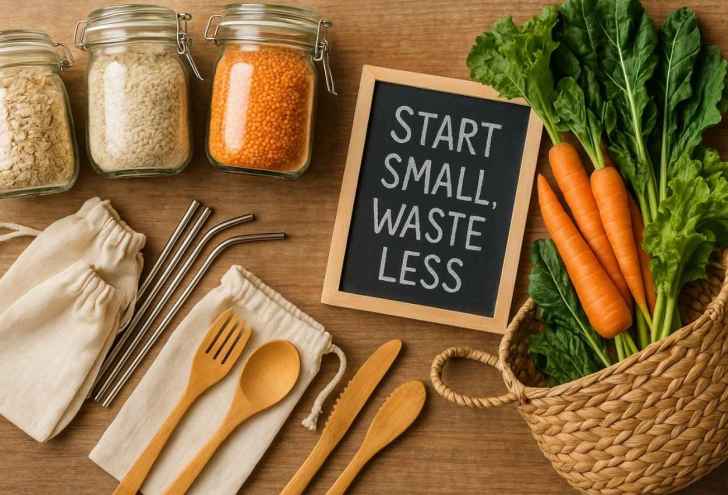

Zero-waste living is often presented as a lifestyle where every piece of rubbish somehow disappears. In reality, it is much more practical than that. The goal is not perfection or producing absolutely no waste. Instead, zero-waste living focuses on preventing unnecessary waste, using products for longer, repairing what can be repaired, and making thoughtful choices about what eventually gets thrown away.
For beginners, the most important thing is to start small. A few consistent changes at home can gradually reduce the amount of waste you generate without making everyday life complicated or expensive. The U.S. Environmental Protection Agency (EPA) places source reduction and reuse above recycling and disposal in its waste-management hierarchy, reinforcing the idea that preventing waste is preferable to dealing with it after it has been created.
What Does Zero-Waste Living Mean?
Zero-waste living is an approach to consumption that aims to keep materials in use for as long as possible and reduce the amount sent to landfills or incinerators. It involves considering the entire life cycle of the things you buy, from packaging and production to reuse and eventual disposal.
Rather than asking, “How can I recycle this?” a zero-waste mindset starts with a different question: “Do I need this at all?”
That simple shift can influence shopping, cooking, cleaning, clothing, travel and even household organization.
Start With the Five Rs
One of the easiest ways for beginners to understand zero-waste living is through the five Rs: refuse, reduce, reuse, repair and recycle.
Refuse means declining things you do not need, such as unnecessary packaging, disposable cutlery, promotional items or printed receipts.
Reduce means buying less and choosing products carefully. Before making a purchase, consider whether you already own something that can perform the same function.
Reuse means giving existing items multiple lives. Glass jars can become storage containers, old clothes can become cleaning cloths, and reusable shopping bags can replace disposable ones.
Repair means fixing damaged belongings instead of immediately replacing them. Clothing, furniture, electronics and household items may often have useful lives far beyond their first problem.
Recycle should generally come after these options. Recycling remains valuable, but it is important to check what your local recycling system actually accepts rather than assuming every item with a recycling symbol belongs in the recycling bin.
Make Your Kitchen More Sustainable
The kitchen is one of the easiest places to begin because it generates several types of everyday waste.
Start by replacing disposable items with reusable alternatives. Reusable food containers, water bottles, shopping bags, cloth napkins and washable cleaning cloths can reduce your dependence on single-use products.
Food waste is another major area to address. Plan meals before shopping and buy quantities that your household can realistically consume. Store food properly, use leftovers creatively and freeze ingredients before they spoil.
Planning your shopping around meals can help you save money while preventing perfectly usable food from becoming waste. The EPA also recommends buying only what you expect to use and finding ways to incorporate leftovers into future meals.
Learn the Basics of Composting
Composting is an excellent next step if you want to reduce household waste. Fruit and vegetable scraps, coffee grounds, certain paper products and yard waste can potentially become compost rather than ending up in the trash.
Composting works by allowing organic materials to decompose under controlled conditions. A basic compost system needs carbon-rich “browns,” nitrogen-rich “greens,” moisture and oxygen.
You do not necessarily need a large garden. Depending on where you live, you may be able to use a small composting system, vermicomposting, or a community collection programme.
If you use a backyard compost pile, learn the accepted materials first. Not every food item belongs in every type of composting system, and local programmes may have different requirements.
Shop With a Zero-Waste Mindset
Zero-waste shopping does not mean purchasing a cupboard full of expensive “eco-friendly” products. In fact, buying lots of new products simply because they are marketed as sustainable can defeat the purpose.
Instead, use what you already have whenever possible.
When something genuinely needs replacing, look for durable products designed for repeated use. Consider packaging, repairability, expected lifespan and whether the item can eventually be reused or recycled.
Buying second-hand is another useful strategy. Clothing, furniture, books, kitchen equipment and many other products can often be found pre-owned, extending the useful life of items that already exist.
Reduce Waste in Your Bathroom
Bathrooms can produce considerable packaging waste because of personal-care products.
Begin with simple changes. Use refillable products where practical, choose durable containers and avoid buying more products than you need. Finish what you already own before replacing it with a supposedly greener alternative.
You can also examine disposable habits. Reusable alternatives may work for items such as towels, cleaning cloths and certain personal-care products, provided they are appropriate for your needs and maintained hygienically.
The goal is not to replace everything overnight. Gradually changing products as they run out is usually more practical and creates less unnecessary consumption.
Rethink Your Wardrobe
Fast fashion can make it tempting to treat clothing as disposable. A zero-waste approach encourages you to buy fewer pieces, choose versatile clothing and care for garments properly.
Before buying something new, consider whether you can repair, alter, borrow or buy second-hand instead.
Simple habits such as washing clothes according to care instructions, repairing small tears and donating usable garments can extend the life of your wardrobe.
Most importantly, avoid treating donation as a reason to overconsume. The most sustainable garment is often the one you already own and continue wearing.
Create a Simple Waste Audit
A waste audit can show you exactly where your biggest problems are.
For one week, pay attention to everything your household throws away. Separate observations into categories such as food scraps, packaging, plastic, paper, clothing and miscellaneous waste.
You may discover that your biggest opportunity is not where you expected. Perhaps takeaway packaging makes up most of your rubbish, or perhaps food waste is the dominant category.
Once you know the source, choose one change that addresses it.
Don’t Aim for Perfection
One of the biggest mistakes beginners make is trying to become completely zero-waste immediately. This can become expensive, overwhelming and difficult to maintain.
Instead, think of zero-waste living as a gradual process.
Start with one habit. Carry a reusable bottle. Plan your grocery shopping. Repair an item instead of replacing it. Start separating food scraps for composting. Decline unnecessary disposable items.
Once that habit becomes automatic, introduce another.
Make Zero-Waste Living a Long-Term Habit
The most effective zero-waste lifestyle is one that fits naturally into your daily routine. You do not need a perfect home filled with specialized products. You need thoughtful consumption habits.
Focus first on refusing what you do not need, reducing what you buy, reusing what you own, repairing what breaks and recycling correctly. Composting can also divert organic material from disposal and turn it into a useful soil amendment.
Ultimately, zero-waste living is less about producing absolutely no rubbish and more about changing the way you think about resources. Every item you avoid buying, reuse, repair or keep out of the landfill represents a small but meaningful improvement.
The best place to begin is not with perfection. It is with the next decision you make.