





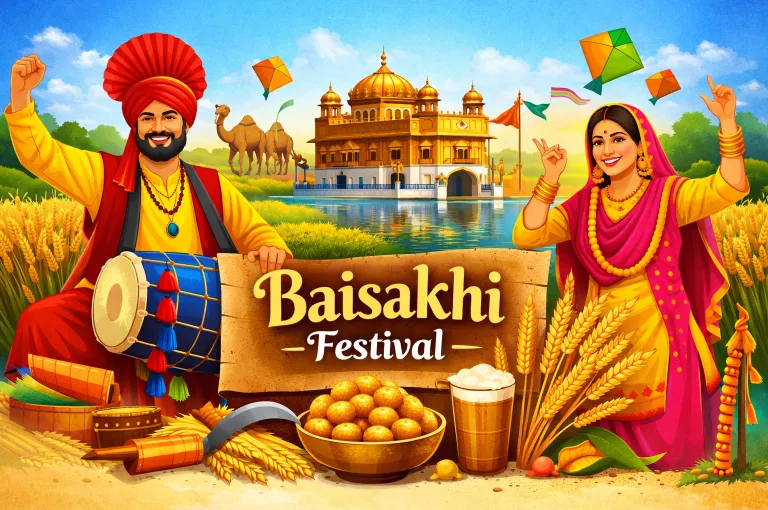
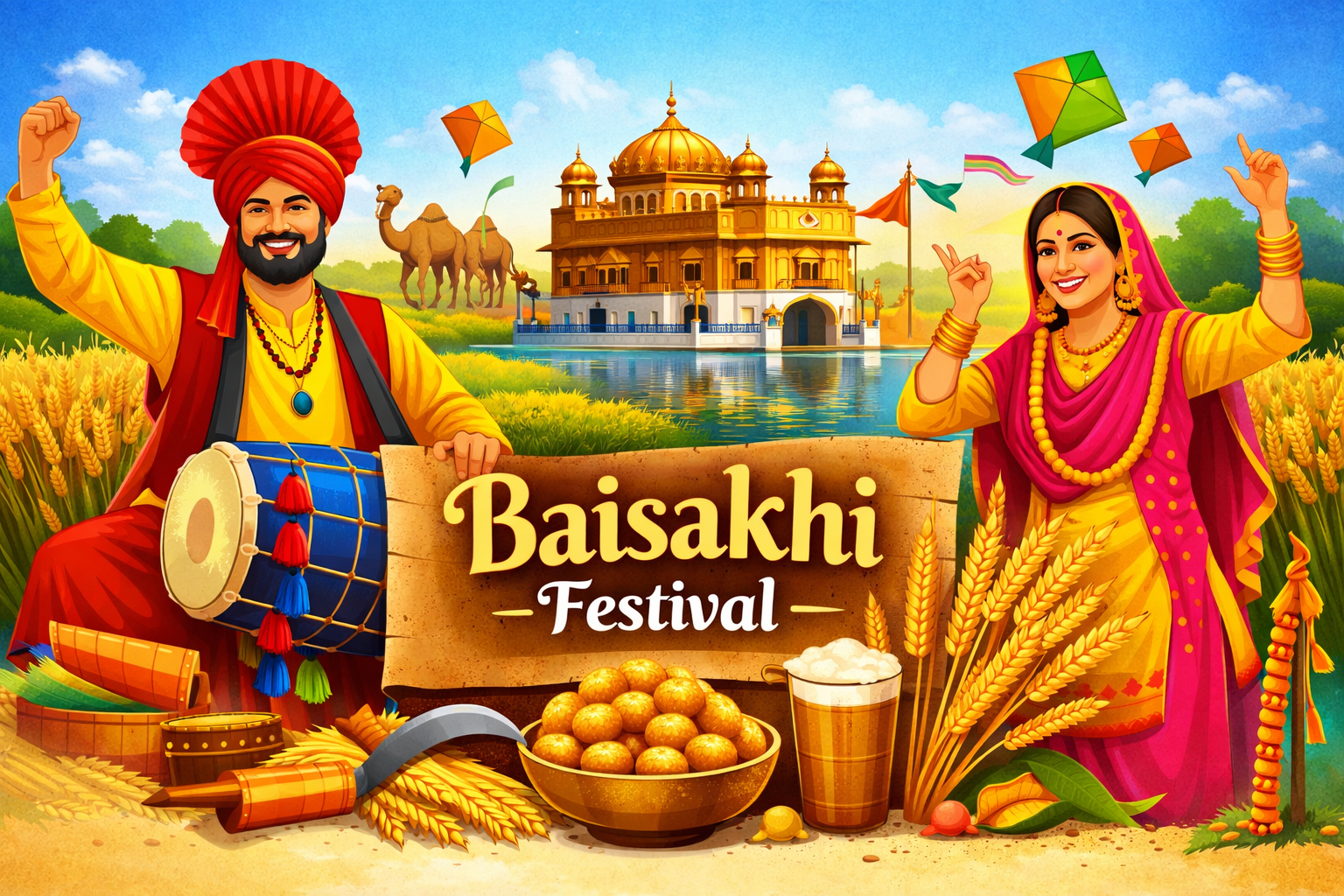
When spring arrives in Punjab, it brings with it a burst of color, rhythm, and celebration. Golden fields ripple in the breeze, and the sound of the dhol fills the air—announcing the arrival of Baisakhi, one of the most vibrant festivals in India.
Whether you’ve celebrated it for years or are experiencing it for the first time, Baisakhi is more than just a festival—it’s a beautiful blend of faith, gratitude, and joy. It marks the Sikh New Year and honors the formation of the Khalsa Panth by Guru Gobind Singh Ji in 1699. At the same time, it’s a heartfelt celebration of the harvest season, especially for farmers.
Let’s take a closer look at what makes Baisakhi so special—from its traditions and food to its music and fashion.
Table of Contents
ToggleTraditions That Define Baisakhi
The day begins early, often before sunrise. Many devotees take a dip in sacred rivers or sarovars as a symbol of purification. Dressed in fresh traditional attire, families then head to the Gurdwara.
Inside, the atmosphere is calm yet spiritually uplifting. Continuous recitation of the Guru Granth Sahib, known as Akhand Path, fills the space with devotion. Kirtans (devotional songs) are sung, celebrating faith and the legacy of the Khalsa.
A highlight of the day is the Nagar Kirtan—a lively procession led by the Panj Pyare, dressed in saffron robes. They carry the Nishan Sahib while devotees sing hymns, distribute sweets, and perform Gatka, the traditional Sikh martial art.
Another deeply meaningful tradition is Langar, a free community meal served to all. People from every background sit together, reinforcing the message of equality and unity.
A Flavorful Feast: Baisakhi Delicacies
No Punjabi festival is complete without a rich spread of delicious food. Baisakhi is a true treat for food lovers, with dishes that reflect the region’s agricultural richness.
Popular favorites include:
Chhole Bature: A hearty combination of spicy chickpeas and fluffy fried bread
Makki Di Roti & Sarson Da Saag: A classic pairing of corn flatbread with mustard greens, topped with butter
For desserts, the options are just as tempting:
Kada Prasad: A sacred sweet offered in Gurdwaras
Meethe Peele Chawal: Sweet saffron rice with dry fruits
Jalebi & Kheer: Traditional festive desserts
And to complete the meal, nothing beats a chilled glass of thick, creamy lassi.
Dance, Music & Celebration
As the day progresses, the celebrations become more energetic. The beats of the dhol invite everyone to dance and celebrate the successful harvest.
Bhangra (for men): A high-energy dance inspired by farming movements, full of jumps, rhythm, and excitement
Giddha (for women): A graceful yet lively dance where women perform in circles, singing “boliyan”—fun and expressive couplets
These performances are not just dances—they’re a celebration of life, culture, and community spirit.
What to Wear on Baisakhi
Dressing up is a big part of the celebration. Bright, cheerful colors like yellow, orange, red, and green dominate the festival, reflecting the beauty of spring.
For Women:
Punjabi Suits: Especially Patiala suits with Phulkari dupattas for a traditional look
Lehengas: Lightweight, colorful designs with mirror work or embroidery
Fusion Wear: Crop tops with skirts, dhoti pants, or modern Indo-western styles
For Men:
Kurta-Pajama: A classic and comfortable choice in festive colors
Nehru Jacket: Adds a stylish layer to the outfit
Juttis: Traditional footwear to complete the look
Fusion styles are also popular, allowing you to blend modern fashion with cultural roots.
Celebrate the Spirit of Baisakhi
Baisakhi is not just about rituals or food—it’s about togetherness, gratitude, and joy. From peaceful prayers at the Gurdwara to the lively beats of Bhangra, every moment carries meaning.
As you prepare to celebrate, embrace the colors, enjoy the food, and immerse yourself in the festive spirit. Whether you’re dancing to the dhol or enjoying a plate of Kada Prasad, Baisakhi is sure to leave you with unforgettable memories and a heart full of happiness.